ServicesFurnace Repair
Furnace Repair in Tekoa, WA
When your furnace quits, short cycles or blows cold air, we come out, find the actual fault and tell you what it takes to fix it. You get a written quote before any work begins, and the diagnostic fee is credited toward the repair.
Fix it now, before the cold settles in
Most furnace trouble starts small. A sensor gets dirty, an igniter wears thin, or a filter clogs and the unit overheats and shuts itself off. Caught early, these are short repairs. Left alone, they tend to fail on the coldest night of the year.
We repair furnaces in homes around Tekoa and in nearby towns like Colfax, Cheney and Spokane Valley. On every call we get your home warm again, make sure the furnace is safe to run and tell you straight whether it's worth fixing.
Fall is the best time to call. If your furnace acted up at the end of last winter, have it looked at before the first hard freeze, not after.
What a furnace repair visit covers
A real diagnosis, not a guess
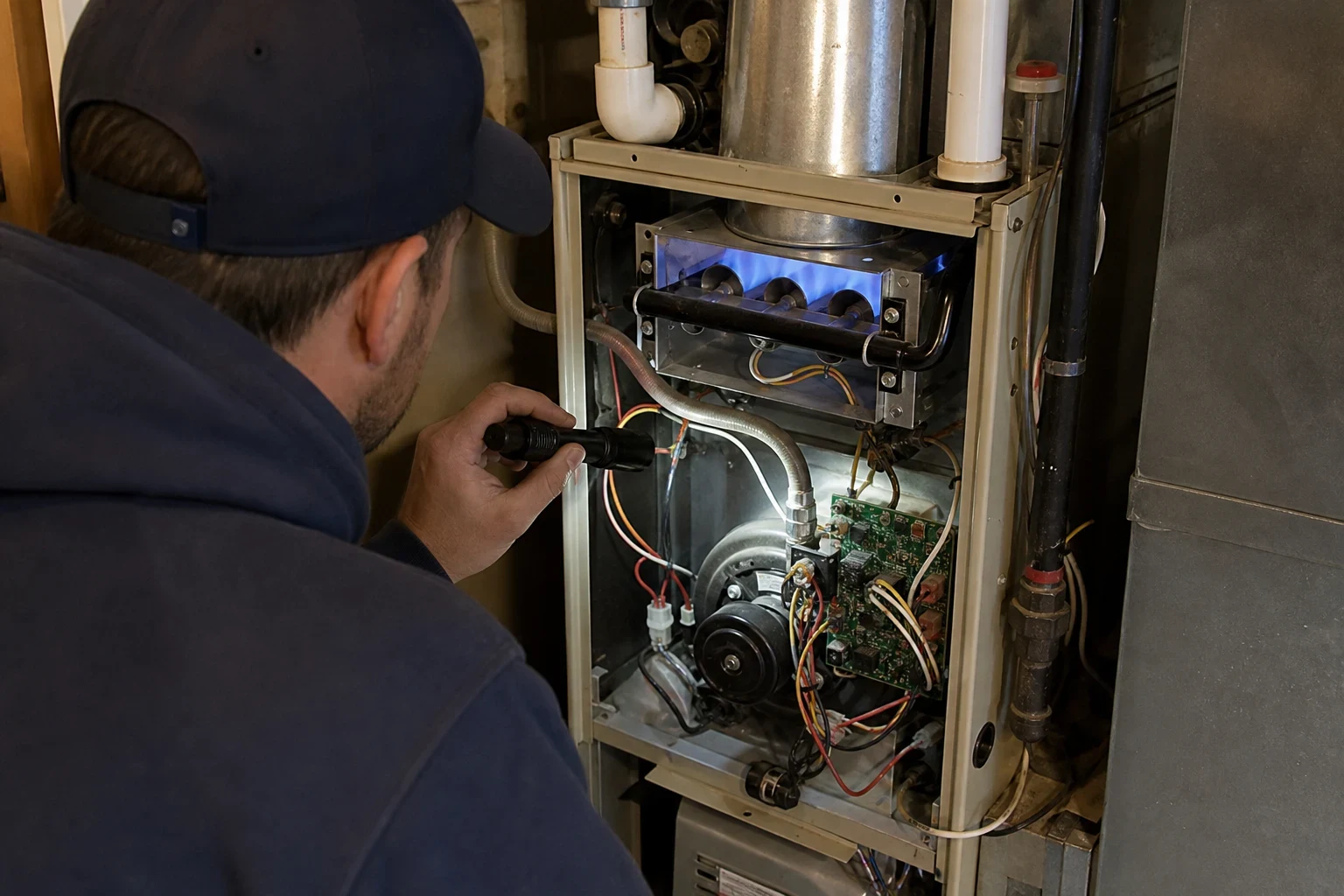
We test the igniter, flame sensor, limit switches, inducer motor, pressure switch and control board until we find what failed and why. Swapping parts until something works is how people get oversold. We don't work that way.
Ignition and flame problems
Cracked igniters and dirty flame sensors are the most common no-heat calls we get. Both are usually fixed in one visit.
Blower and motor repair
If the burners light but no air moves, we check the blower motor, capacitor and wheel. A blower that drags can also trip the high-limit switch and shut the whole furnace down.
Safety checks on every call
We look at the heat exchanger for cracks, check the vent and draft, and test for carbon monoxide around the unit. If something isn't safe to run, we tell you and show you.
Thermostat and wiring
Sometimes the furnace is fine and the problem is the thermostat or a loose low-voltage wire. We check that early so you don't pay for parts you don't need.
Signs your furnace needs repair
Cold air from the vents
The blower runs but the air is cool or lukewarm. That usually points to ignition, the gas valve or a safety switch shutting the burners off.
Short cycling
The furnace starts, runs a few minutes and shuts off, over and over. Overheating from a clogged filter or a failing limit switch is a common cause.
New noises
Banging at startup, squealing or a steady rattle. Delayed ignition and worn blower bearings both get loud before they fail.
Gas bills creeping up
If your bill climbs and the weather hasn't changed much, the furnace may be running longer to do the same work.
Yellow flame or a burning smell
Burners should burn mostly blue. A yellow, lazy flame or a smell that won't go away needs a look soon. If you smell gas, leave the house and call your gas utility first.
It won't start at all
Check the thermostat batteries, the switch near the furnace and the breaker. If it's still dead, give us a call.
How a furnace repair call goes
- 1
Tell us what's happening
We ask what you're hearing, the furnace's age and what you've already tried. Calls late at night and on weekends get answered too, and there are no emergency or after-hours fees.
- 2
We find what failed
Your tech checks everything from the thermostat to the vent pipe and shows you the failed part. Drop cloths go down and we keep the area clean.
- 3
You see the price in writing
No work starts until you have a written quote, and the diagnostic fee is credited toward the repair if you approve it. If the furnace is near the end of its life, we'll say so and explain furnace installation as an option, without pushing.
- 4
Repair, test and clean up
Once the repair is done, we run several full heating cycles and check temperatures and safety controls. Then we clean up before we go.
What changes the cost of a furnace repair
Cost comes down to the failed part and how long it takes to reach. We won't price a furnace over the phone before seeing it. The number is on paper before any work begins.
- The part that failed
- Cleaning a flame sensor is quick. A gas valve, inducer motor or control board means a pricier part and more labor.
- Age and brand
- Parts for older or uncommon furnaces can be harder to get and cost more. On a very old unit, we weigh the repair against how many years it likely has left.
- Where the furnace sits
- An open basement makes for quick work. A furnace tucked into an attic or crawlspace takes longer.
- How long it was left
- A problem caught at a fall checkup is usually a simpler repair than a part that ran to failure in January. Weeks of overheating can also wear out other parts.
Furnace repair questions
Something not covered here? (509) 204-1886
Is an older furnace worth repairing?
Often it is. A single failed part is usually worth fixing. If the furnace is old, needs a major part like a heat exchanger or keeps breaking down, we lay out repair and replacement side by side and let you pick.
Do I pay for the diagnosis if you do the repair?
The diagnostic fee is credited toward the repair, and you'll see it on the written quote before work begins.
Can you come out at night if the heat stops?
Yes. Emergency HVAC repair is available 24/7, and we charge no emergency or after-hours fees. Nobody should sit without heat in freezing weather until morning. Our emergency HVAC repair page explains how those calls go.
How do I keep it from breaking down again?
Change the filter every one to three months during heating season and have the furnace tuned up each fall. Our maintenance plans include a yearly tune-up, lower repair prices and priority scheduling.
What should I check before I call?
Make sure the thermostat is set to heat and has good batteries. Check for a filter packed with dust, confirm the switch near the furnace is on and look for a tripped breaker. If it still won't run, call us.
Let's get your house warm again
Describe what the furnace is doing and we'll tell you what comes next. The quote is in writing before any work starts.