ServicesEmergency HVAC Repair
Emergency HVAC Repair in Tekoa
When the furnace quits on a below-zero night or the AC dies in a July heat wave, we answer the phone 24/7. We find the fault, put the price in writing, and get heat or cooling back in your home. No after-hours fees.
When a breakdown can't wait until morning
Some problems can sit until a weekday. Others can't. No heat when it's freezing outside means pipes at risk within hours. A gas smell, a burning smell, or a breaker that keeps tripping is a safety issue. An AC failure in high summer is hard on babies, older folks and anyone with a health condition. Those are the calls we take at any hour.
If your system is running but noisy, or just not keeping up as well as it used to, it can usually wait for a regular visit. Our furnace repair and AC repair pages cover that kind of work. Not sure which one you've got? Call and describe it. We'll tell you straight whether it needs someone tonight.
What an emergency visit covers
- Diagnosis on any system
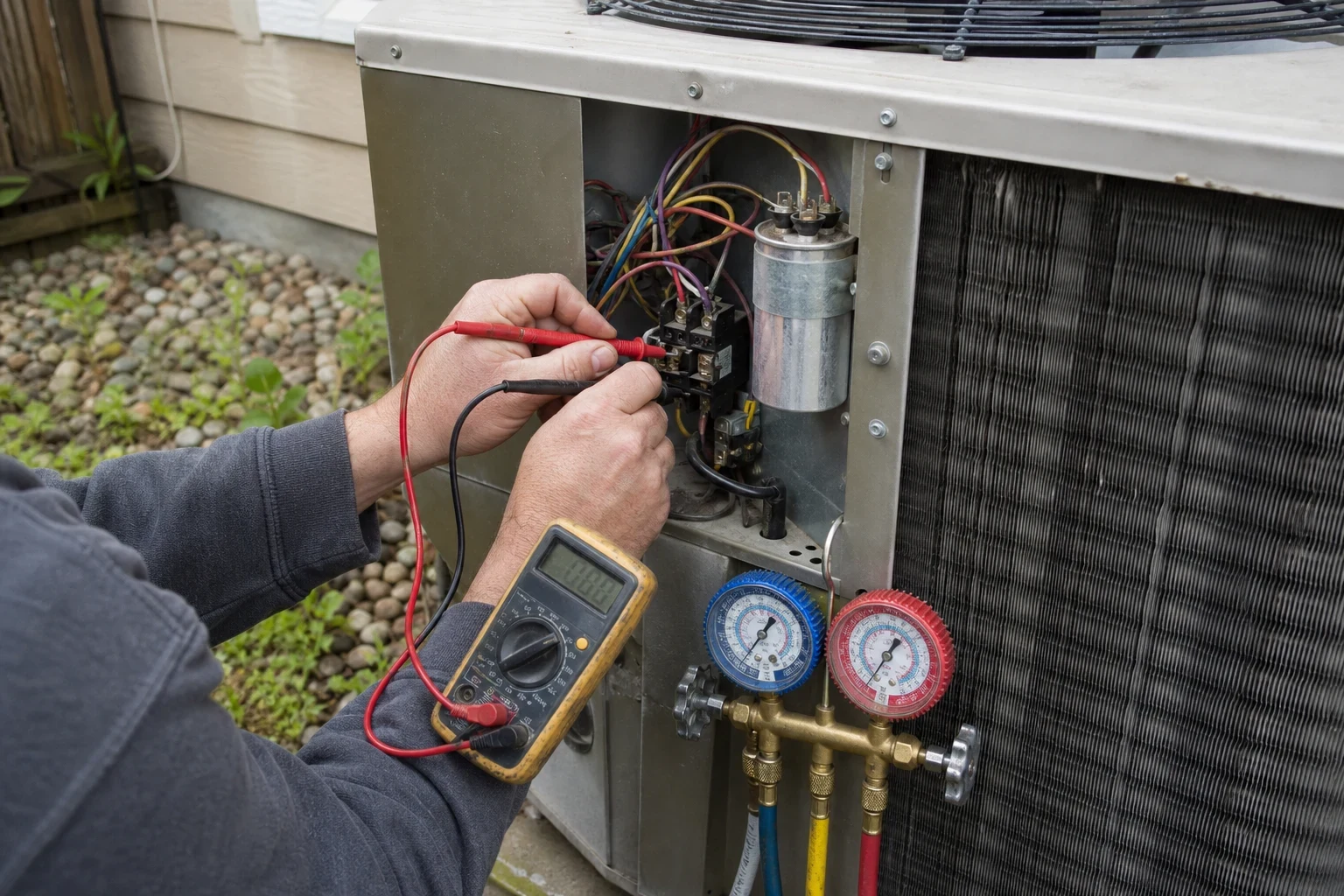
- We work on gas furnaces, central AC, heat pumps and ductless mini-splits. We test until we know the cause, not just the symptom.
- Safety checks first
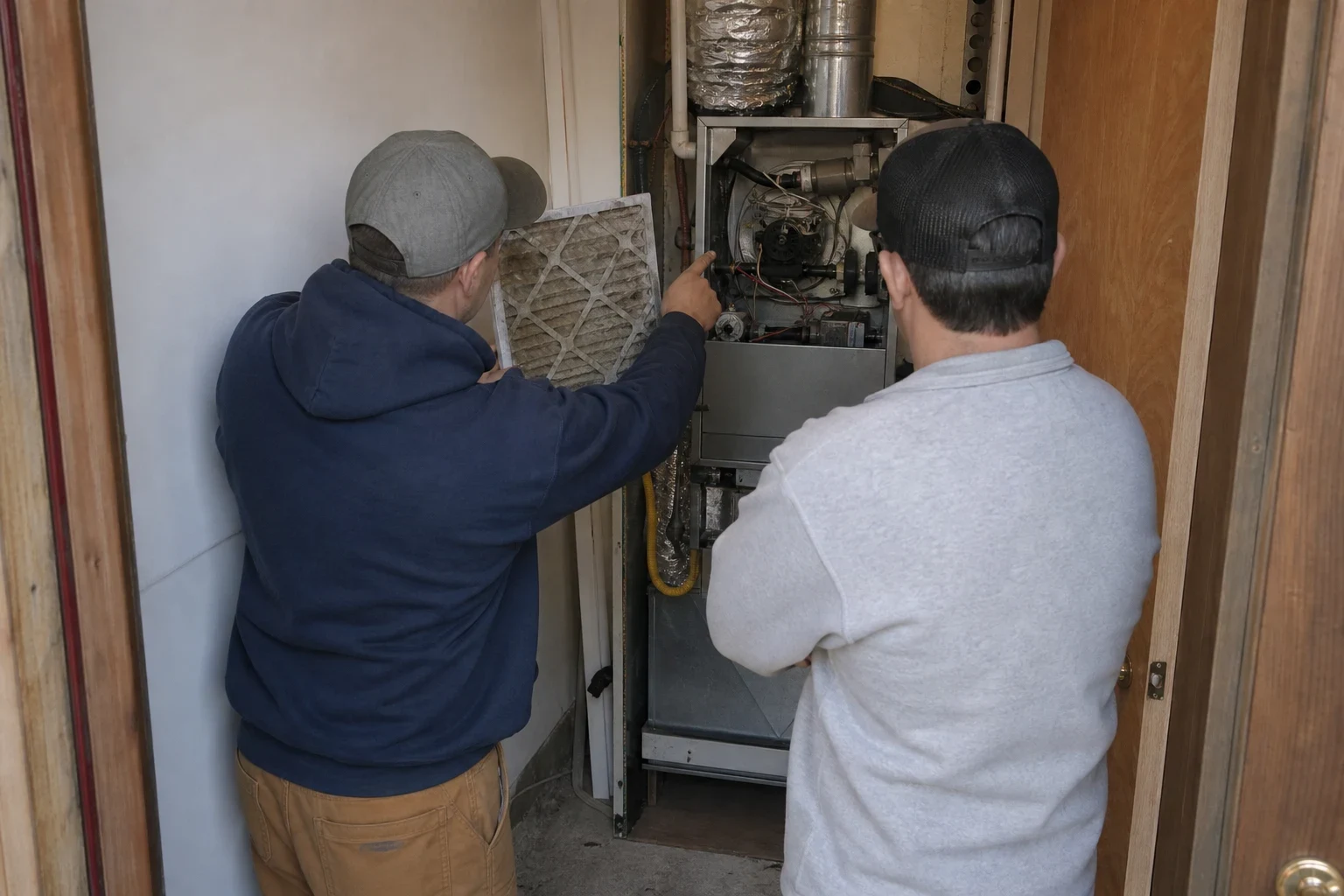
- On a gas furnace we check for gas leaks and carbon monoxide, look at the heat exchanger, and confirm the venting is clear. If something isn't safe to run, we tell you and shut it down.
- Common parts on hand
- Most breakdowns come down to a handful of wear parts: igniters, flame sensors, capacitors, contactors, inducer and blower motors. We carry the common ones so many repairs get finished on the first visit.
- A written quote before work
- You see the price on paper before we touch a wrench. If you'd rather wait or get a second opinion, that's your call.
- Diagnostic fee credited
- If you go ahead with the repair, the diagnostic fee is credited toward it.
Signs you need help tonight
No heat and the house is cooling fast
If the thermostat is calling for heat and nothing comes out, check the breaker and the furnace switch. If that doesn't fix it, call before indoor temps drop into the 40s.
Rotten egg smell
That's a possible gas leak. Leave the house, then call your gas utility from outside. Once they clear it, we can find and fix the cause.
Burning or electrical smell
A hot, sharp smell from the furnace or air handler can mean a failing motor or wiring. Turn the system off at the thermostat and call.
Blinking codes and lockouts
Many furnaces lock themselves out after a few failed starts. Resetting it over and over can hide a real problem.
Outdoor unit humming but not running
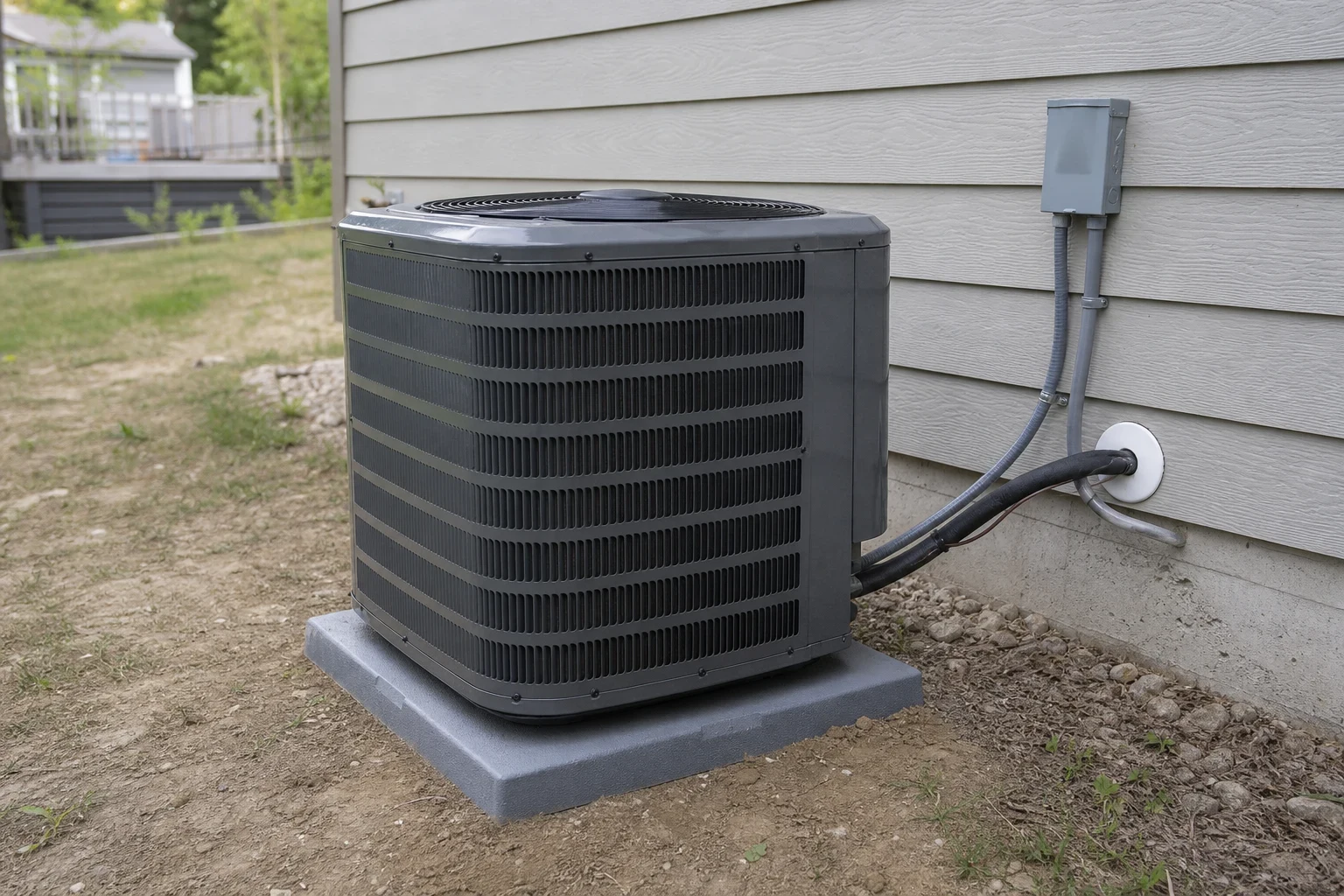
That's often a failed capacitor or a seized fan motor. Leaving it on can burn out the compressor, so shut it off.
Water on the floor or ice on the lines
A pool near the furnace or ice on the copper line outside points to a drain or refrigerant problem that gets worse the longer it runs.
How an emergency call goes
- 1
You call, we ask a few questions
We ask what you're seeing, how old the system is, and whether anyone in the house is at risk from the cold or heat. If there's a safety step to take before we arrive, we walk you through it.
- 2
We arrive and make it safe
First job is checking for gas, CO and electrical hazards. Then we get to work on the fault.
- 3
Diagnose and quote
We show you what failed and why, and hand you a written price. If a part isn't on the truck, we tell you what can be done tonight to keep the house safe until it's in.
- 4
Repair and test
We fix it, then run the system through full heating or cooling cycles and check temps at the vents before we leave. We clean up our work area.
- 5
Talk about what's next
If the breakdown came from wear a tune-up would have caught, we'll say so. A maintenance plan gets the system checked before the cold or hot season hits.
What moves the cost of an emergency repair
We don't charge extra for nights, weekends or holidays. The price comes from the repair itself, and you get it in writing before any work begins. Here's what makes one repair cost more than another.
- The part that failed
- A flame sensor or capacitor is a small fix. A blower motor, control board or compressor is a bigger one.
- System type and age
- Heat pumps and high-efficiency furnaces use more specialized parts. Older units can need parts that are harder to source.
- Getting to the equipment
- A furnace in a tight crawlspace or attic takes longer to work on than one in an open basement. So does an outdoor unit buried in snow.
- Refrigerant work
- If an AC or heat pump is low on refrigerant, finding the leak and recharging adds time and material.
- Repair or replace
- On an old system with a major failure, we'll give you an honest repair-or-replace answer. Estimates are free on installations and replacements.
Emergency repair questions
Something not covered here? (509) 204-1886
Do you charge more at night or on weekends?
No. We don't add emergency or after-hours fees. A furnace repair at 2 a.m. is priced the same as one at 2 p.m.
I smell gas. Should I call you first?
Get everyone out of the house first, and don't flip switches or light anything. Call your gas utility from outside. Once they say it's safe, call us and we'll find the leak or the faulty part and fix it.
How do I protect my pipes while I wait?
Open cabinet doors under sinks on outside walls and let faucets drip. Close blinds and keep doors shut to hold heat. A space heater can help, but keep it well clear of anything that burns and never leave it running unattended.
My furnace is old. Is it worth fixing in the middle of the night?
Often yes, at least to get you through the cold. We'll tell you if the repair makes sense or if you'd be putting money into a system near the end. Then you decide, with the price in writing.
Do you work on heat pumps and mini-splits after hours?
Yes. Emergency calls cover heat pumps, ductless mini-splits, central AC and gas furnaces.
Do you come out past Tekoa?
Yes. We take emergency calls across the area, including Colfax, Pullman, Cheney and Spokane Valley. Call and tell us where you are.
Get heat or cooling back tonight
We pick up any hour, give you a written price before work starts, and charge no after-hours fees. Tell us what the system is doing and we'll take it from there.