ServicesCommercial HVAC
Commercial HVAC in Tekoa
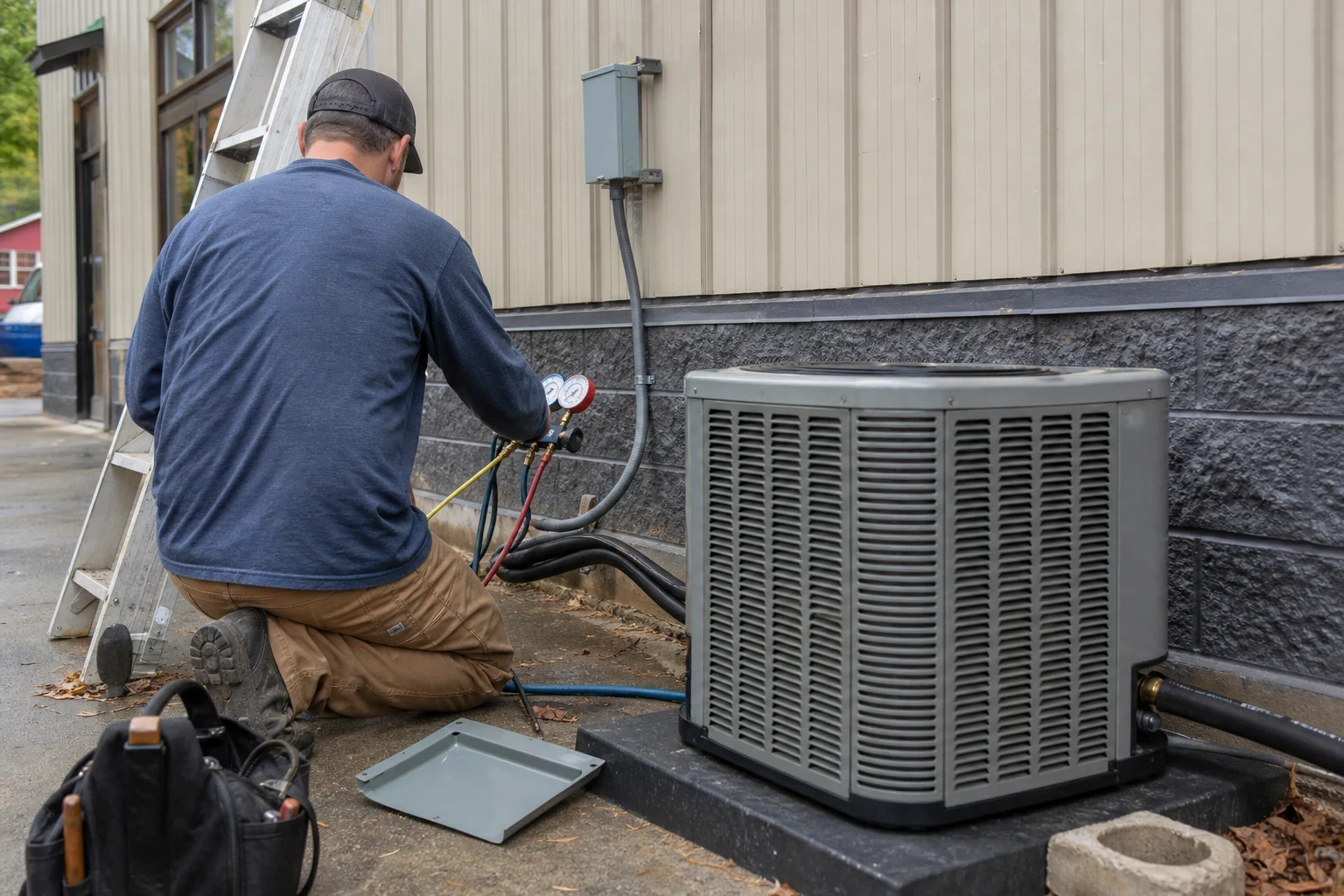
We service, repair and replace heating and cooling equipment for small businesses. That covers rooftop units, split systems and gas shop heaters. We work around your hours, explain what we find and give you a written quote before any work begins.
Heating and cooling that keeps your doors open
A business can't send people home every time the heat quits. Staff get cold, customers leave and stock can spoil. Most of the calls we get could have been caught a month earlier with a filter change, a belt or a cleaned coil.
So we plan commercial work around the seasons. Cooling gets checked in spring, before the first hot week. Heating gets checked in fall, before the first hard freeze. When something does break, we fix it and tell you plainly whether the unit has years left or is costing you more than it should.
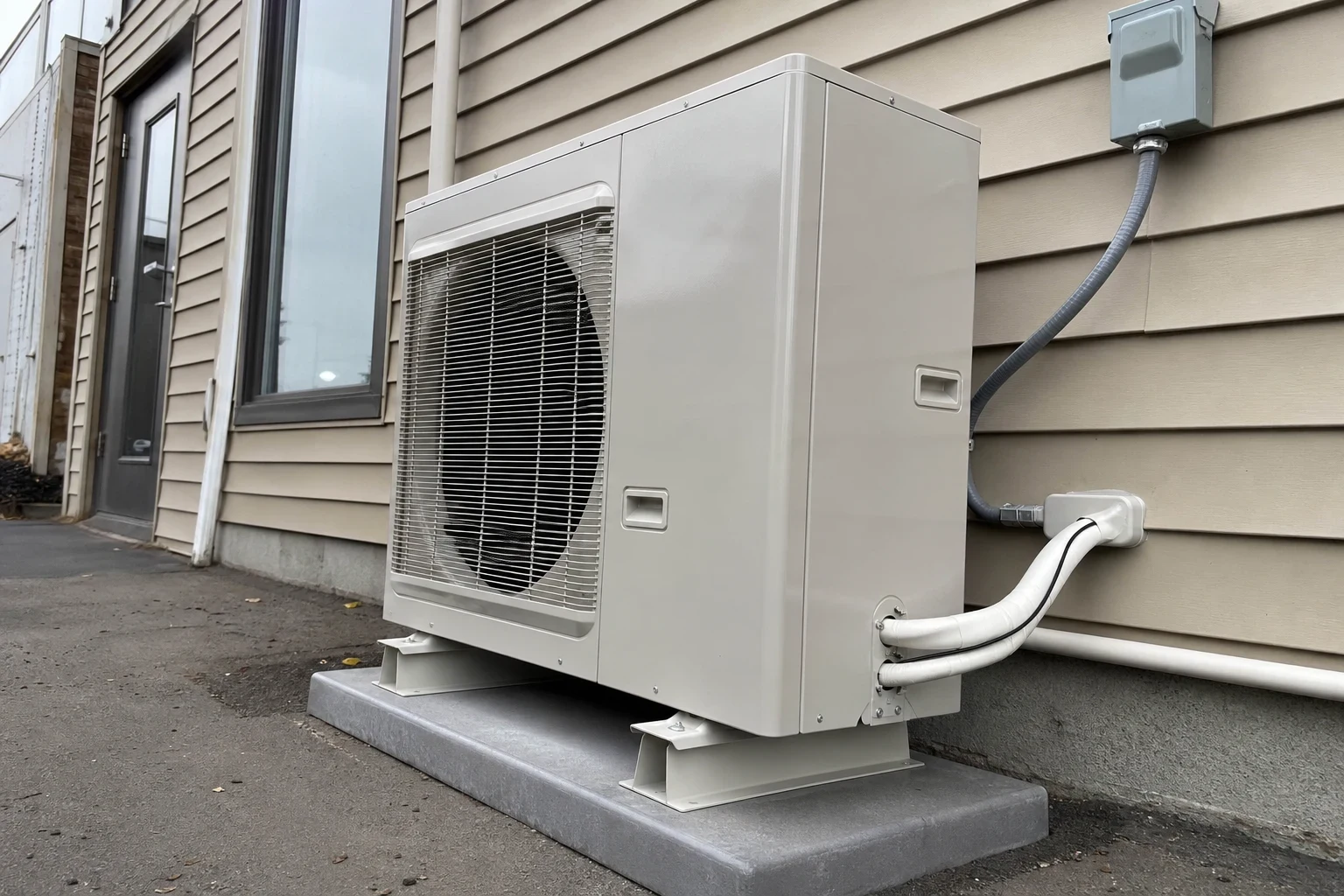
We work on the equipment most small buildings around Tekoa run: packaged rooftop units, split systems, gas unit heaters in shops and garages, and ductless heads in offices.
What our commercial service covers
Rooftop unit service
We clean condenser and evaporator coils, change filters and check belts, bearings and motors. We test the gas side and safeties on units that heat. If your unit has an economizer, we make sure the damper actually moves.
Shop and warehouse heaters
Hanging gas unit heaters collect dust and sit idle all summer. We clean the burners, check the flame and venting, and test the controls so they light when you need them.
Repairs on the spot
Most trucks carry common capacitors, contactors, igniters and belts. If a part has to be ordered, we tell you how long it should take and what we can do to keep you running until it arrives.
Thermostats and scheduling
A thermostat holding 70 all weekend in an empty building burns money. We set up programmable controls so the space is comfortable when you open and coasting when you're closed.
Replacement and new equipment
When a unit is done, we size the new one to your space and how you use it. Estimates are free on installations and replacements.
Signs your building's system needs a look
- Some rooms never get comfortable
- The front of the store is cold while the back office cooks. That often points to a failing unit, a stuck damper or controls that need setting up again.
- Power bills creeping up
- Dirty coils and worn parts make equipment run longer for the same result. If your bill climbs with no change in hours, the system is working too hard.
- Short cycling or constant running
- A unit that kicks on and off every few minutes, or never shuts off, is wearing itself out. Catching it early usually means a smaller repair.
- New noises from the roof or ceiling
- Squealing usually means a belt. Grinding or rattling can mean a motor bearing or a loose panel. Both get worse and more expensive if they run all season.
- Gas smell or burner trouble
- If a heater smells like gas, won't stay lit or shows a lazy yellow flame, shut it off and call us. We answer 24/7 for that kind of problem.
How a commercial service call goes
- 1
You call and tell us what's going on
We ask what equipment you have, what it's doing and when your building is open. That lets us show up with the right parts and work around your customers.
- 2
We inspect and find the cause
We check the unit, the controls and the gas or electrical side. You get a straight answer on what's wrong. The diagnostic fee is credited toward the repair if you go ahead.
- 3
You get a written quote
Before any work begins, you see what we plan to do and what it costs. Nothing gets added without your OK.
- 4
We do the work and clean up
We fix it, test it through a full cycle and clean up after ourselves, on the roof and inside. Then we walk you through what we did and what to watch for next season.
What sets the price of commercial work
Every building is different, so we price the job after we see it. A written quote comes before any work begins, and there are no emergency or after-hours fees. These are the things that move the number most.
- Type and size of equipment
- A small split system in an office costs less to service than a large rooftop unit or several shop heaters. The number of units matters as much as their size.
- Access
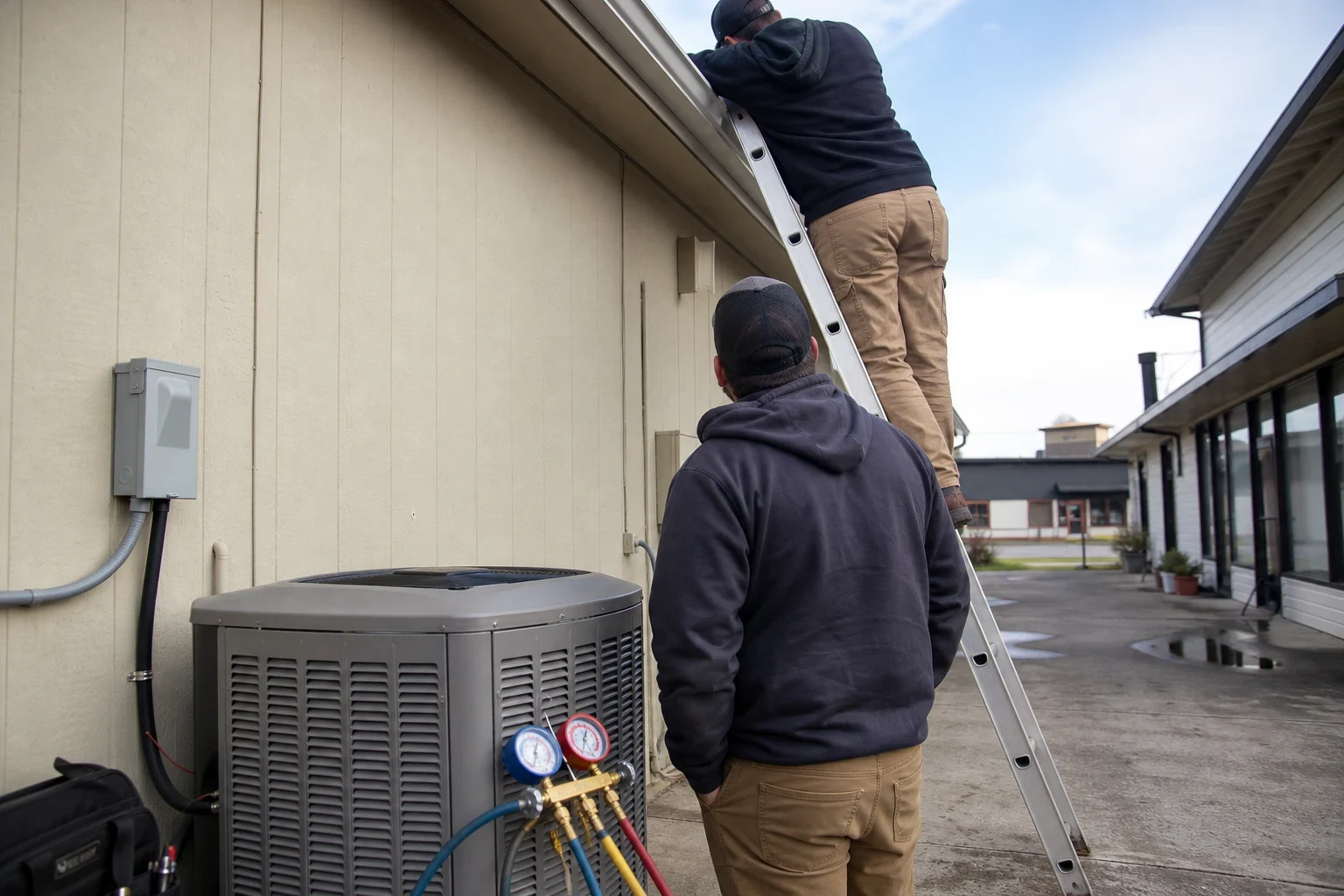
- Units on a flat roof with a ladder hatch are quick to reach. Steep roofs, tight attics or high ceiling heaters take more time and sometimes a lift.
- Age and condition
- Older units can need hard-to-find parts. Years of skipped maintenance often mean extra cleaning before we can even diagnose the real problem.
- Repair or replace
- A capacitor or belt is a small fix. A failed compressor on an old unit may make replacement the better spend, and we'll tell you honestly which way we'd go.
Commercial HVAC questions
- Can you work outside our business hours?
- Yes. We can schedule early mornings or after closing so your customers aren't disturbed. For breakdowns we answer 24/7, and there are no emergency or after-hours fees.
- How often should a commercial unit be serviced?
- Twice a year works for most small buildings. Spring for cooling and fall for heating. Dusty shops or busy kitchens may need filters changed more often between visits.
- Do you work on rooftop units?
- Yes. Packaged rooftop units are a big part of our commercial work. We service, repair and replace them, and we handle the gas heating side as well as the cooling side.
- Is our old unit worth repairing?
- Sometimes. We look at its age, how often it's broken down and what the repair costs compared to a new unit. If a repair makes sense, we'll say so. If it doesn't, we'll show you why and give you a free estimate on a replacement.
- Do you serve businesses outside Tekoa?
- Yes. We take commercial calls across the area, including Colfax, Cheney, Spokane Valley and Pullman. Tell us where your building is when you call.
Get your building ready before the weather turns
A spring or fall checkup costs less than a breakdown on the first hot or freezing day. Call and tell us what you're running, and we'll set up a time that works for your business.