ServicesDuctless Mini-Splits
Ductless Mini-Splits in Tekoa
A mini-split heats and cools a room or a whole floor without any ducts. We size it, mount it and set it up so it carries you through hot afternoons and cold snaps. Plan it before the season turns and you're comfortable when it does.
What a mini-split does and when it makes sense
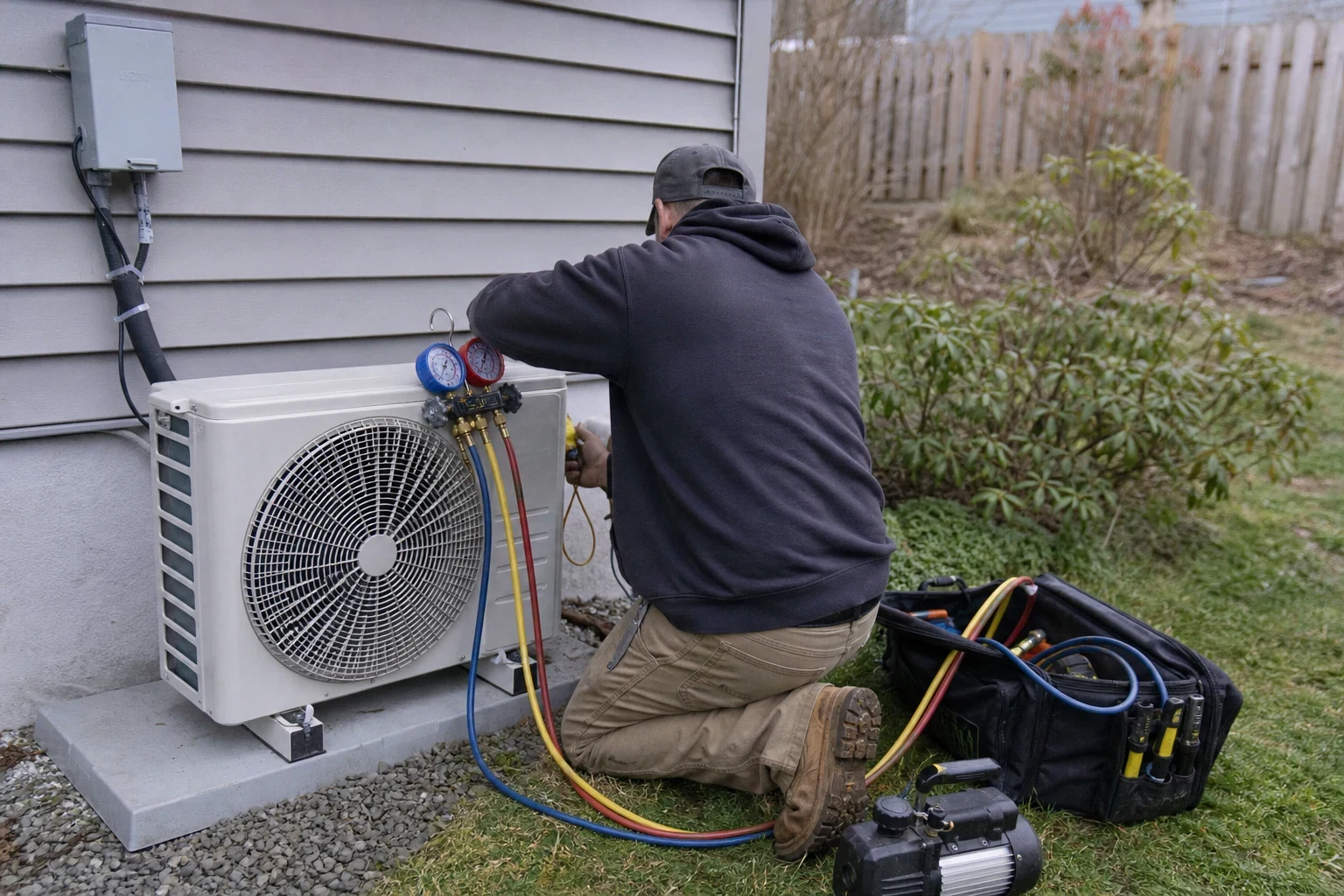
A ductless mini-split is a heat pump with two parts. An outdoor unit sits on a pad or wall bracket. One or more indoor heads mount high on the wall. A small line set runs through a 3-inch hole between them, carrying refrigerant, power and a drain line.
It's the right call for rooms that stay cold in winter and stuffy in summer: a bonus room over the garage, a converted porch, an addition, a basement, or an older house that was built with a boiler or baseboard heat. Each head has its own thermostat, so you heat or cool only the rooms you use.
Our winters get well below freezing, so we install cold-climate models built to keep putting out heat when it's bitterly cold outside. We'll tell you plainly if a mini-split fits your home, or if another option like a central heat pump or furnace work makes more sense.
What's included in a mini-split install
- Room-by-room sizing
- We measure each room, check windows and insulation, and size every head to the space. An oversized head short-cycles and leaves the air clammy. An undersized one runs flat out in January.
- Head placement
- We pick a spot on the wall where air reaches the whole room and the line set has a clean path outside. You see where everything goes before we drill.
- Outdoor unit set above the snow
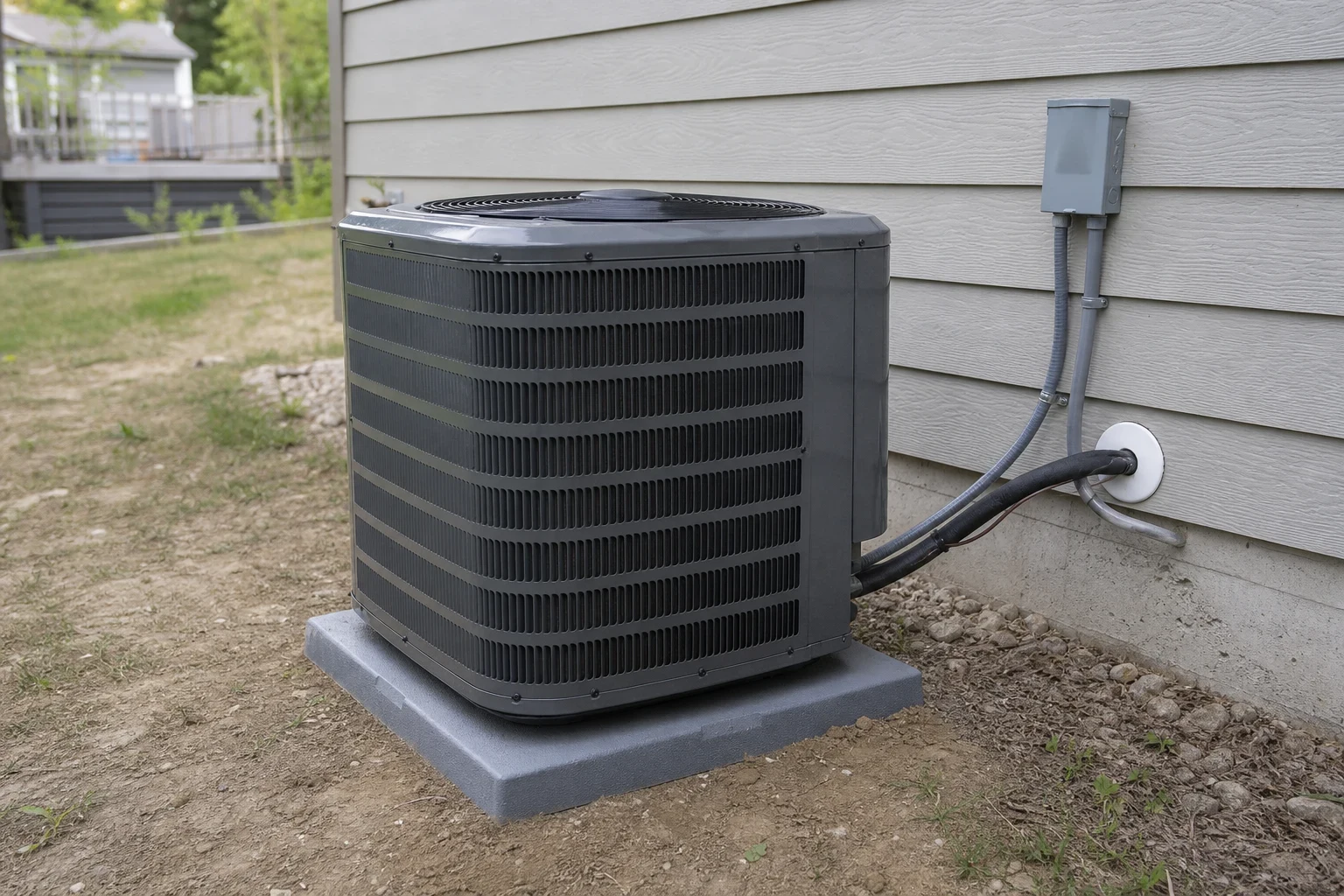
- The outdoor unit goes on a stand or wall bracket high enough to clear drifts and let defrost water drain away. That keeps ice from building up under it.
- Line set, drain and wiring
- We run the refrigerant lines, condensate drain and control wire, and cover them outside with a tidy line-hide cover. The unit gets its own disconnect so it can be serviced safely.
- Vacuum, charge and startup
- We pressure-test the lines, pull a deep vacuum and release the charge. Then we run it in heat and cool mode and show you the remote.
- Cleanup and paperwork
- We clean up drill dust and packing, and we handle the permit and inspection where one is needed.
Signs a mini-split could fix your problem
One room never matches the rest
The far bedroom or the room over the garage runs 10 degrees off the thermostat. A head in that room handles it on its own.
You've added on or finished a space
New square footage often has no ducts, or your old furnace can't keep up with it. A mini-split heats and cools the new space without touching the existing system.
Space heaters and window units
If you plug in heaters every winter and haul out a window unit every July, one mini-split replaces both and runs far quieter.
A home with no ducts
Boiler, baseboard or wood heat only, and no way to cool. Mini-splits add cooling and efficient heat without tearing open walls.
High electric heat bills
Baseboard heaters turn every watt into one watt of heat. A heat pump moves heat instead of making it, so the same room usually costs less to warm.
How the job goes
- 1
Phone call and visit
You call, we set a time to come look. Estimates are free on installations and replacements. We walk the rooms, check your electrical panel and look at where the outdoor unit can sit.
- 2
Written quote
You get a written quote before any work begins, with the equipment, number of heads and any panel work listed out. No guessing about what's in it.
- 3
Install day
A single-head job usually takes a day. We lay drop cloths, mount the head, drill the wall, set the outdoor unit and run the lines. Multi-head systems can take longer.
- 4
Startup and walkthrough
We test it in both modes, check temperatures at each head and show you how to clean the filters. You'll know how to run it before we leave.
What changes the price
No two houses are laid out the same, so we price the job once we've seen yours. How many rooms you want heated and cooled matters most. The other things that affect the total are below, and every one appears on your written quote.
- How many indoor heads
- A single head for a single room is the easiest job. Every added head means more equipment, more line set and more work on the walls.
- Length of the line run
- A head on an outside wall just above the outdoor unit goes in fast. Running lines up two stories or through an attic takes more time and material.
- Room in your electrical panel
- A mini-split needs a circuit of its own. An older or full panel may need work before the system can be connected.
- Which model you pick
- Cold-climate units cost more than standard ones but keep up their heat output in freezing weather. We'll show you both and explain what separates them.
- Rebates and tax credits
- We help you file for Avista rebates and federal tax credits on heat pumps, which can lower your out-of-pocket cost.
Common questions about mini-splits
Something not covered here? (509) 204-1886
Can a mini-split actually keep up in January?
Cold-climate units keep producing heat when it's far below freezing outside. Output drops during the harshest cold, so for heating a whole house we check how it works alongside your current system. For one room or an addition, it usually covers that space by itself.
Will I need to remove my furnace?
Not at all. Plenty of homeowners hold onto the furnace and use a mini-split for the rooms it misses. Others run the mini-split most months and let the furnace step in during deep cold. We'll go over which setup suits your house.
Is it noisy?
Inside, the head sounds about like a fan on its lowest setting. Outside, the unit hums, and in winter you'll hear a brief whoosh during defrost. Most owners say it's far quieter than a window unit.
How much maintenance does it take?
Rinse the filters in the indoor heads every month or two, and keep leaves and snow off the outdoor unit. Once a year the coil and drain should be cleaned. That tune-up is part of our maintenance plans.
What time of year is best for an install?
Spring or early fall. The system is in place before summer heat or the first hard freeze, and dates are easier to get than during a heat wave.
Get the cold room sorted before winter
Tell us which rooms give you trouble and we'll come take a look. You'll have a written quote in hand before anything gets drilled.